
Charlotte, North Carolina, with its rapidly growing population of over 885,000 residents and extensive highway network, including I-77, I-85, and I-485, experiences thousands of vehicle accidents annually. The Charlotte-Mecklenburg Police Department reports that the city’s busy intersections and high-traffic corridors see a significant number of collisions each year, many involving disputes over fault determination. With the increasing complexity of traffic patterns and the rise in distracted driving incidents, dashcam technology has become an invaluable tool for drivers seeking to protect themselves legally and financially.
Dashcam use has spiked in recent years as drivers seek to protect themselves in the event of an auto crash. If you’ve been involved in a car accident and need legal assistance, consulting with a Charlotte car accident lawyer can help you understand how dashcam footage might strengthen your case. Dash cams—small cameras that capture video footage from a vehicle’s viewpoint—are useful tools in accident claims.
How Dashcams Work in Accident Claims
Dashcams are like a third-party witness during an accident. A dashcam simply captures the events as they happened, unlike human recollections that can be influenced by stress or bias. These recordings may reveal how the events unfolded before the accident, the actions of the parties involved, and even the condition of the environment, such as weather and road conditions. That evidence is critical to determining fault or liability.
Benefits for Drivers
Having a dashcam is reassuring for motorists. It is infinitely more comforting in complex and often contested cases to know that there exists an objective form of evidence. That could help in preventing false claims that can lead to unnecessary penalties or higher insurance premiums. Dashcams can encourage better driving habits, too. Knowing that there is some kind of recording device may lead drivers to be more careful and follow the rules of the road.
Legal Implications and Privacy Concerns
Dashcams bring benefits for evidence but also raise legal and privacy issues. In some regions, there are laws surrounding the use of recording devices within vehicles. Others may impose limits on location, use, and, in particular, audio capture for dash cameras. According to the National Highway Traffic Safety Administration, while dashcam footage can be valuable evidence in accident reconstruction, drivers must ensure they comply with local recording laws and privacy regulations.
Challenges in Using Dashcam Evidence
While dashcam footage is helpful, it is not without its issues. Recording quality needs to be examined carefully, for example, for problems with technical issues like low-quality video or malfunctioning of the device. Plus, dash cams usually only record from one angle, which can miss a lot of context. Footage can also be somewhat subjective. Video footage is clear, but different ideas abound about how to interpret it. Various parties may focus on specific details and form different conclusions on fault or responsibility.
Selecting the Right Dashcam
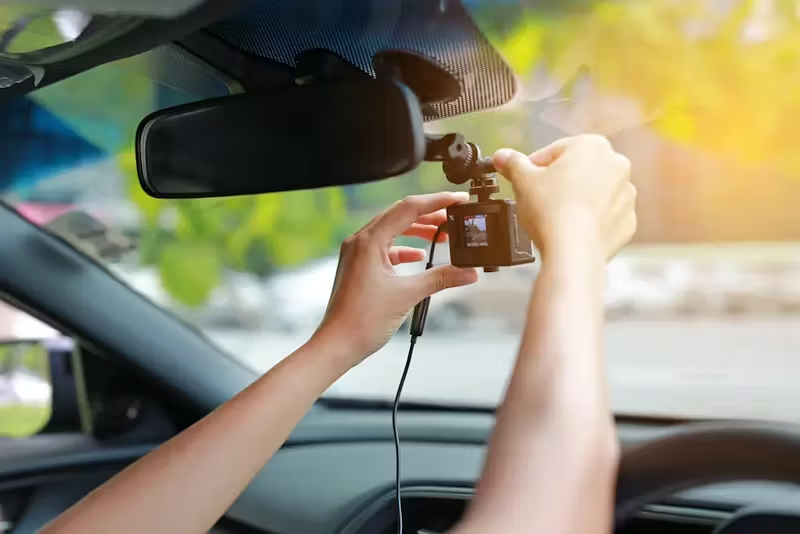
If you want the best evidence possible, then you will need to select the proper dashcam. Things like video quality and storage space, along with optional features like night vision or GPS tracking, matter. Good dashcams enable you to record in high quality and have enough memory to keep significant portions of recordings. Other key points to consider are installation and placement. Proper placement ensures the dashcam covers the required field of view. Performing regular maintenance, such as firmware updates or removing anything blocking the lens, will allow the device to run at its full potential.
Impact on Insurance Claims
Dashcams help insurance companies and law enforcement piece together the events surrounding a crash. Clear proof eliminates disputes and speeds up the claim process. Thus, all the parties could save some resources and time. Insurance companies often view dashcam footage favorably because it provides objective evidence that can prevent fraudulent claims and help determine accurate fault assessment.
Conclusion
Dashcams are changing the game for car collision claims, as they can provide evidence that is objective and clear, resulting in a more straightforward resolution process. There are a lot of benefits, but at the same time, drivers should never overlook the legal side and the privacy side of these incidents, as this type of technology has both advantages and disadvantages. With a proper dashcam, drivers can legally use this technology to protect themselves while also looking out for their community. When used responsibly, it will create a safer yet more transparent driving experience for everyone.

